About Shree Swami Samarth of Akkalkot
Divine Origin and Early Life
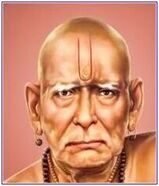
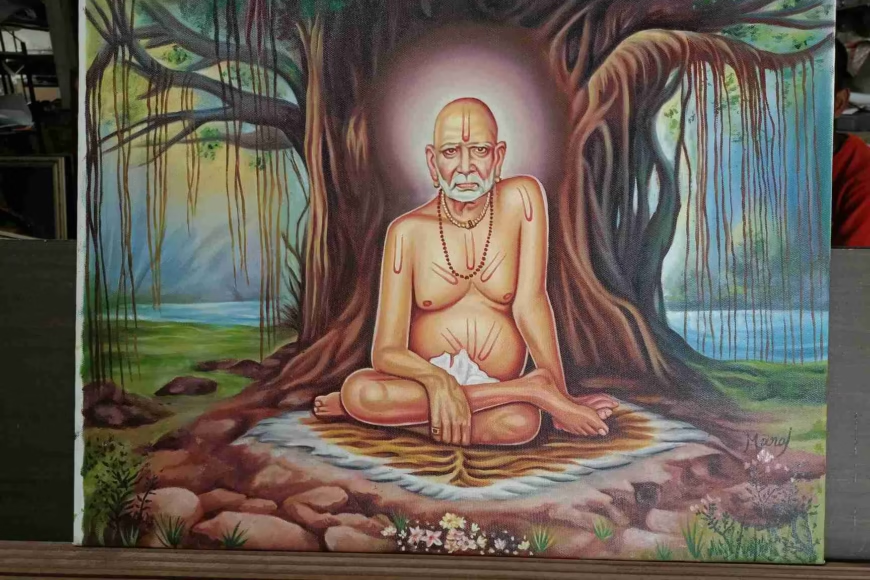
Shree Swami Samarth Maharaj was an Indian Hindu spiritual master of the Dattatreya Tradition who lived during the nineteenth century. He is revered as an incarnation of Lord Dattatreya, the divine trinity of Brahma, Vishnu, and Mahesh. His origins remain shrouded in divine mystery, though when once asked about his birth by a disciple, Swami responded that he had originated from a banyan tree.
According to spiritual tradition, Shri Swami Samarth is considered an extended version of Shrimad Narasimha Saraswati, the second incarnation of Lord Dattatreya. The most captivating account of his manifestation describes how Shrimad Narasimha Saraswati went into deep meditation in the Kardali forests near Srisailam in present-day Andhra Pradesh, and over time a huge anthill grew over him.
One day, a woodcutter’s axe accidentally fell on the bushes around the anthill, and he was shocked to find blood stains on the blade. Upon clearing the anthill, he discovered a Yogi in meditation who slowly opened his eyes and explained it was Divine Will for him to reappear in the world. This awakened Yogi came to be known as Swami Samarth.
Travels Across the Indian Subcontinent
Before settling at Akkalkot, Swami Samarth traveled extensively across the Indian subcontinent and is believed to have visited Tibet, Nepal, and various regions including Puri, Varanasi, Haridwar, Girnar, Kathiawar, and Rameswaram. During his travels in the Himalayan region, he even visited China.
He is believed to have visited Maniknagar, Karnataka to meet Manik Prabhu, another saint considered an incarnation of Dattatreya, where he resided for around six months. He also spent time at Mangalvedha, a town near Pandharpur in Solapur district, Maharashtra, which had been home to famous saints like Domojipant and Chokhamela.
Arrival and Life at Akkalkot (1856-1878)
Swami Samarth arrived at Akkalkot during either September or October in 1856 on receiving an invitation from Chintopant Tol. The town of Akkalkot, located about 40 kilometers from Solapur on the border of Maharashtra and Karnataka, would become his final earthly abode.
Upon his arrival, an interesting incident occurred that established his divine nature. The Risaldar of the area, a Muslim person, wanted to test Swami by offering him an empty smoking pipe without tobacco and asking him to smoke it. Swami Samarth started smoking the empty pipe after lighting it as if nothing had happened. Recognizing him as an advanced spiritual being, the Risaldar apologized and arranged for his stay in the house of one Cholappa. It was in this small house that Swami Samarth lived for the remaining 22 years of his earthly existence.
He resided at Akkalkot for close to 22 years, living at the residence of his disciple Cholappa, where his shrine is presently located. During this time, his reputation as a spiritual master spread far and wide, and devotees from all walks of life came seeking his blessings and guidance.
Miraculous Powers and Divine Interventions
Swami Samarth was known for his miraculous interventions in the lives of his devotees, with historical accounts describing numerous instances where he manifested divine powers, from materializing gold to heal the sick and aiding the impoverished.
Some remarkable incidents from his life include:
- Healing Through Divine Grace: One notable miracle was his intervention to save a devotee’s wife from severe pain by merely his divine glance, which immediately alleviated her suffering.
- Bringing Back the Dead: Swami Samarth had a peculiar habit of bringing people who had been dead for a long time back to life to accomplish certain tasks. Once while walking along a river bank, he told a person that his deceased father was looking after his crying child at home. When the man rushed home, he was astonished to see his long-dead father attending to the baby.
- Saving Lives: When death approached one of his devoted servants named Babasaheb, Swami Samarth redirected the fate by having a bull fall dead instead, thus sparing his devotee’s life.
- Humbling the Proud: When a doctor from a Bombay hospital, proud of his professional competence, met Swami Samarth, the Swami asked him how many eye patients he had treated had lost their eyesight forever. This profound question shattered the doctor’s ego, and he became a devoted follower, eventually settling at Akkalkot after retirement to serve the Master.
Core Teachings and Philosophy
Swami Samarth’s teachings emphasized unconditional love, karma, and devotion, resonating deeply with a wide spectrum of followers. His spiritual guidance transcended social and economic barriers, reaching people from all backgrounds.
Key Principles of His Teachings:
- Shraddha aani Saburi (Faith and Patience) – His most famous teaching, emphasizing the importance of unwavering faith and patient perseverance on the spiritual path
- Devotion and Righteousness – He advocated for a life of devotion, righteousness, and compassion, transcending social and economic barriers
- Karma and Action – The importance of righteous action and fulfilling one’s duties without attachment to results
- Universal Compassion – There was no better savior than Shri Swami Samarth for relieving the sufferings of the poor, earning him praise as the Mother of All Orphans
- Spiritual Transformation – Like a touchstone that converts ordinary metal to gold, spiritual masters can give spiritual life to any person in a fraction of a second by a touch, a look, a word, or even a mere thought
Mahasamadhi and Living Legacy
On April 30, 1878, on the Hindu calendar date of Chaitra Krishna Trayodashi, the great sage adopted Mahasamadhi in the house of Shri Cholappa. Swami Samartha took samadhi in 1878, and his teachings continue to be followed by millions of people in Maharashtra, with his ashram in Akkalkot remaining a popular place of pilgrimage.
The Samadhi is considered “Jagrut” – awakened and alive even today, with his spiritual powers experienced by devotees whose prayers are answered, who are healed of their sufferings, and whose desires are fulfilled. Though Shri Swami Samarth has ceased to be in his bodily form, he continues to bless and guide his devotees to this day.
Sacred Mantra
A common mantra commemorating Swami Samarth is “Aum Abhayadata Shree Swamisamarthaya Namaha”, which devotees chant to invoke his divine grace and protection.
Biographical Works
His first biography was written by Sakharam Balkrishna Sarnaik named Shripadbhushan in 1871, followed by Sant Wamanbhau Maharaj’s Shree Guruleelamrut written in 1872. These works, along with numerous other texts, chronicle his life’s events and interpret his teachings for contemporary spiritual seekers.
The Sacred Land of Akkalkot
Today, Akkalkot stands as the most sacred pilgrimage site dedicated to Shri Swami Samarth. Thousands of devotees visit daily to receive darshan at his shrine and experience his living presence. The land sanctified by his 22-year stay continues to radiate spiritual energy, drawing seekers from across India and around the world.
Jai Jai Swami Samarth 🙏